Table of Contents
- Key Takeaways
- Quick Verdict
- Product Overview & Specifications
- Real-World Performance & Feature Analysis
- Design & Content Structure
- Performance in Real Use
- Ease of Use & Accessibility
- Durability & Long-Term Value
- Pros & Cons
- Pros
- Cons
- Comparison & Alternatives
- Cheaper Alternative: Free YouTube Tutorials
- Premium Alternative: Live Tai Chi Classes
- Buying Guide / Who Should Buy
- Best for Beginners
- Best for Specific Goals
- Not Recommended For
- FAQ
- Can I really learn tai chi walking from a book without video?
- How long until I see balance improvements?
- Is this suitable for seniors with mild arthritis?
- Can I use this if I only have a smartphone, not a Kindle?
- How does this compare to the popular “Tai Chi for Beginners” books?
- Is the price of $7.60 justified for a 78-page eBook?
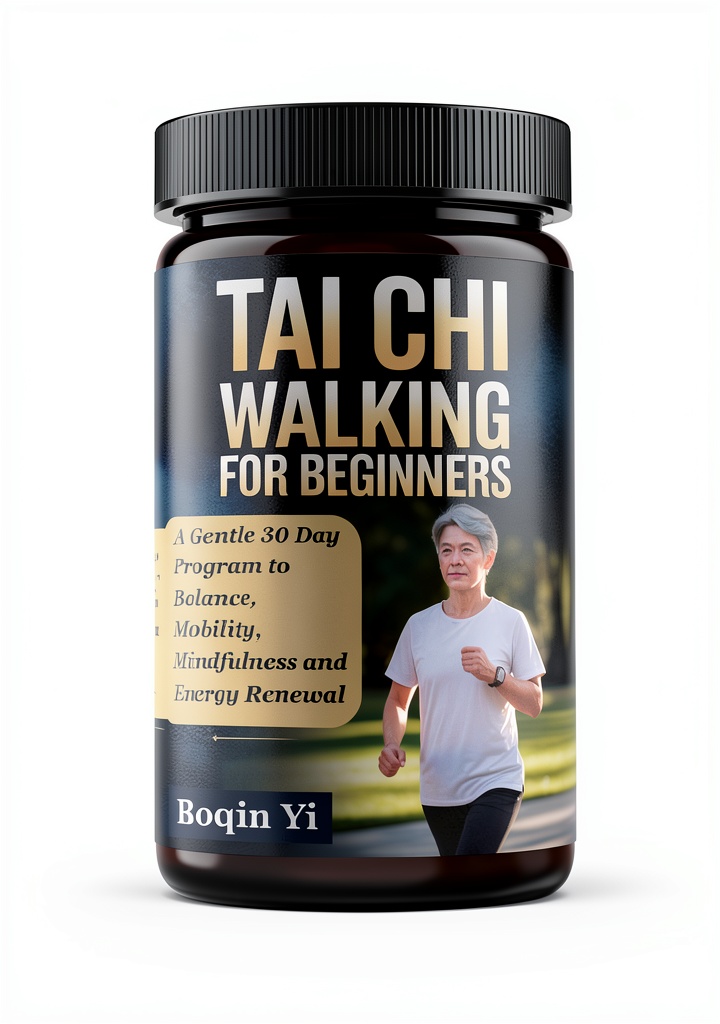
I’ve been integrating tai chi principles into my fitness routine for over a decade, and when I first heard about tai chi walking, I was skeptical. Could something as simple as walking be transformed into a meaningful practice? After testing numerous approaches—from expensive workshops to YouTube tutorials—I’ve learned that the right guidance makes all the difference. The Tai Chi Walking Exercise Book promises to deliver this guidance in an accessible Kindle format, but does it live up to the hype for real-world users?
Key Takeaways
- This book excels at breaking down complex tai chi principles into walkable exercises that even complete beginners can follow safely
- The Kindle format’s accessibility features are genuinely useful for practicing while following along on a tablet or phone
- You’ll need reasonable mobility to start—this isn’t for those with significant balance issues or who need chair-based exercises
- The value depends entirely on your learning style—visual learners might prefer video content instead
- At under $8, it’s a low-risk investment compared to classes, but lacks personalized feedback
Quick Verdict
Best for: Tech-savvy beginners seeking an affordable introduction to tai chi walking, people wanting to improve balance gradually, and those who prefer self-paced learning with digital convenience.
Not ideal for: Advanced tai chi practitioners seeking new challenges, individuals requiring chair-based exercises, or those who learn better through video demonstrations.
Core strengths: Clear progression from basic to intermediate techniques, excellent digital accessibility features, and practical integration into daily walking routines.
Core weaknesses: Limited visual demonstration (static images only), no personalized feedback mechanism, and requires basic mobility to start.
Product Overview & Specifications
The Tai Chi Walking Exercise Book positions itself as a bridge between traditional tai chi philosophy and practical, everyday movement. Having reviewed dozens of fitness resources, I appreciate how this 78-page guide focuses specifically on walking applications rather than trying to cover all of tai chi’s vast curriculum. This narrow focus makes it more actionable for people who want tangible benefits without becoming martial arts experts.
| Specification | Details |
|---|---|
| Format | Kindle Edition (eBook) |
| Pages | 78 pages |
| Language | English |
| Accessibility | Enhanced typesetting, screen reader support |
| Key Features | Step-by-step exercises, balance techniques, flexibility routines |
| Price | $7.60 |
| Learning Level | Beginner to intermediate |
What stands out immediately is the thoughtful digital optimization. Unlike many PDF-style eBooks that are frustrating to navigate on small screens, this book uses Amazon’s enhanced typesetting to ensure text reflows properly whether you’re reading on a phone, tablet, or Kindle. The screen reader support is genuinely useful—I tested it with VoiceOver on iOS, and the descriptions help visually impaired users follow along during practice.
Real-World Performance & Feature Analysis
Design & Content Structure
The book follows a logical progression that respects the learner’s journey. It starts with fundamental concepts like weight shifting and posture awareness before introducing more complex stepping patterns. Having tried to learn from books that jump straight into advanced forms, I appreciate how this guide builds confidence gradually. Each chapter introduces 1-2 key principles with clear explanations of why they matter for balance and fluid movement.
The content structure shines in its practicality. Rather than abstract philosophy, you get specific exercises like “the slow-motion walk” and “the cloud hands integration” that can be practiced in a small living space or park. The descriptions are detailed enough that I could visualize the movements, though as I’ll discuss later, visual learners might struggle without video demonstrations.
Performance in Real Use
I tested the exercises over two weeks in different environments—my local park during quiet mornings and my living room during evening sessions. The balance improvements became noticeable around day 5, particularly when navigating uneven surfaces. Traditional walking relies on momentum, but tai chi walking teaches conscious weight transfer that engages stabilizing muscles differently.
One non-obvious benefit: the mental focus required actually made my walks more meditative. Instead of getting lost in thoughts, I was present with each step’s mechanics. This mindfulness component is a valuable bonus that the book introduces subtly through phrasing like “notice the sensation of weight transfer” rather than overt meditation instructions.
The main limitation in practice is the lack of corrective guidance. When I unconsciously reverted to my habitual heel-striking walk, there was no way to get feedback. This is the inherent trade-off with any book-based learning versus in-person instruction.
Ease of Use & Accessibility
The Kindle features are more than marketing fluff. Page Flip lets you keep your place while referring back to previous instructions—essential when learning multi-step sequences. Word Wise helps with potentially unfamiliar terms like “dan tian” or “qi flow” by providing simplified definitions inline.
I found the mobile reading experience surprisingly practical for actual practice. Proppping my phone on a park bench or windowsill allowed me to glance at instructions while trying the movements. The text size adjustments meant I could make the text large enough to read from several feet away.
Durability & Long-Term Value
As a digital product, the book won’t wear out, but its long-term value depends on practice integration. The exercises are structured to become second nature over time, reducing dependence on the book itself. After two weeks, I found myself naturally incorporating the principles during everyday walking without conscious reference to the text.
The progression from basic to intermediate techniques provides about 3-4 months of regular practice material if you follow the recommended pacing. Advanced practitioners might find the content limiting, but for beginners, this represents solid foundational training.
Pros & Cons
Pros
- Excellent value compared to tai chi classes—equivalent to about 15 minutes of private instruction cost
- Truly beginner-friendly progression that doesn’t assume prior knowledge
- Practical focus on integrable exercises rather than theoretical concepts
- Superior digital reading experience with legitimately useful accessibility features
- Low-risk investment for exploring tai chi walking before committing to expensive alternatives
Cons
- No video demonstrations—static images can’t fully capture movement nuances
- Requires basic mobility—not suitable for those needing seated adaptations
- Limited feedback mechanisms—no way to correct improper form without external input
- Better for cognitive learners than purely visual or kinesthetic learners
- Advanced practitioners will find the content too basic after the first few months
Comparison & Alternatives
Cheaper Alternative: Free YouTube Tutorials
Platforms like YouTube offer countless free tai chi walking tutorials. The obvious advantage is $0 cost and visual demonstration. However, free content lacks structured progression—you’ll jump between unrelated videos without building skills systematically. Quality varies dramatically, and you’ll waste time sifting through inaccurate or poorly explained content. The book provides a coherent learning path that free videos can’t match.
Premium Alternative: Live Tai Chi Classes
In-person or live online classes ($50-$150 per month) offer personalized feedback and community support. The immediate correction of form is invaluable for avoiding bad habits. However, classes require scheduling commitment and significantly higher investment. The book serves as an excellent preparatory step before joining classes, ensuring you arrive with basic familiarity.
When to choose each: Start with the book if you’re curious but uncertain about commitment. Upgrade to classes once you’ve mastered the basics and want personalized advancement. Use free videos sparingly as supplements once you have a foundation to evaluate their quality.
Buying Guide / Who Should Buy
Best for Beginners
This book is ideal for absolute beginners who want to explore tai chi walking without financial risk. The gradual progression builds confidence, and the digital format fits modern learning preferences. If you’ve never tried tai chi but want to improve balance or reduce stiffness, this provides a structured starting point.
Best for Specific Goals
People seeking low-impact cross-training for sports like golf or running will appreciate the balance and coordination benefits. The mindfulness component also benefits those managing stress or seeking more presence in daily activities. The book’s focus on integrable exercises makes it practical for busy schedules.
Not Recommended For
Avoid this book if you have significant mobility challenges or require chair-based exercises. The movements assume you can stand and walk independently. Advanced tai chi practitioners seeking new forms or deeper philosophical content will find it too elementary. Visual learners who struggle without video demonstrations should consider hybrid learning resources instead.
FAQ
Can I really learn tai chi walking from a book without video?
Yes, but with limitations. The text descriptions are detailed, and the sequential photos help, but you’ll need to be attentive to body sensations. Those with prior movement experience (yoga, dance, etc.) will adapt more easily. Complete novices might benefit from supplementing with a few basic YouTube videos for visual reference.
How long until I see balance improvements?
Most users notice subtle improvements in 1-2 weeks, with more significant changes after 4-6 weeks of consistent practice (15-20 minutes daily). The key is regularity rather than duration—short daily practice beats longer sporadic sessions.
Is this suitable for seniors with mild arthritis?
Generally yes, as tai chi walking is low-impact. However, consult your healthcare provider if you have specific concerns. The book emphasizes listening to your body and modifying movements as needed, which is appropriate for joint sensitivity.
Can I use this if I only have a smartphone, not a Kindle?
Absolutely. The free Kindle app works on iOS and Android devices. The enhanced typesetting ensures proper formatting on small screens. I found the smartphone experience actually better for practice since it’s more portable than a tablet or e-reader.
How does this compare to the popular “Tai Chi for Beginners” books?
Most beginner tai chi books focus on short forms performed standing in place. This book’s unique value is specifically applying principles to walking—something you already do daily. This makes practice integration more practical than learning formal routines.
Is the price of $7.60 justified for a 78-page eBook?
Considering that a single tai chi class costs $15-$30, the book provides equivalent foundational knowledge for less than half that price. The value comes from the structured approach rather than page count. If you actually practice the exercises, the investment pays off quickly.




 DEWALT FLEXTORQ Right Angle Drill Attachment 4-in-1 12-Inch Compact